

For today’s students, online life is real life.
Social media, online gaming, and digital communication shape how students connect with others and experience the world around them. But these spaces can also influence students’ focus, sleep, relationships, and overall well-being in ways many adults are still learning to understand
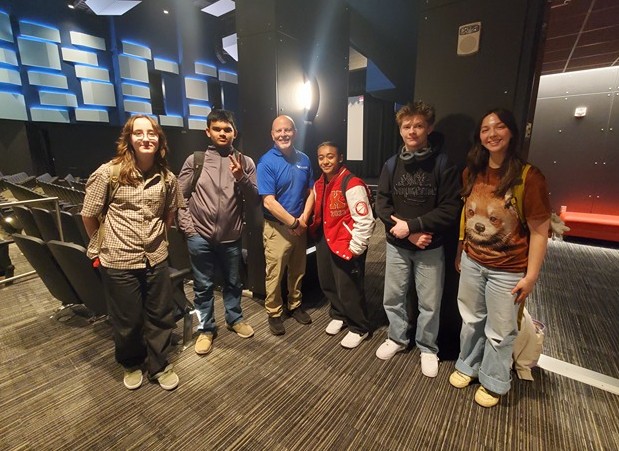
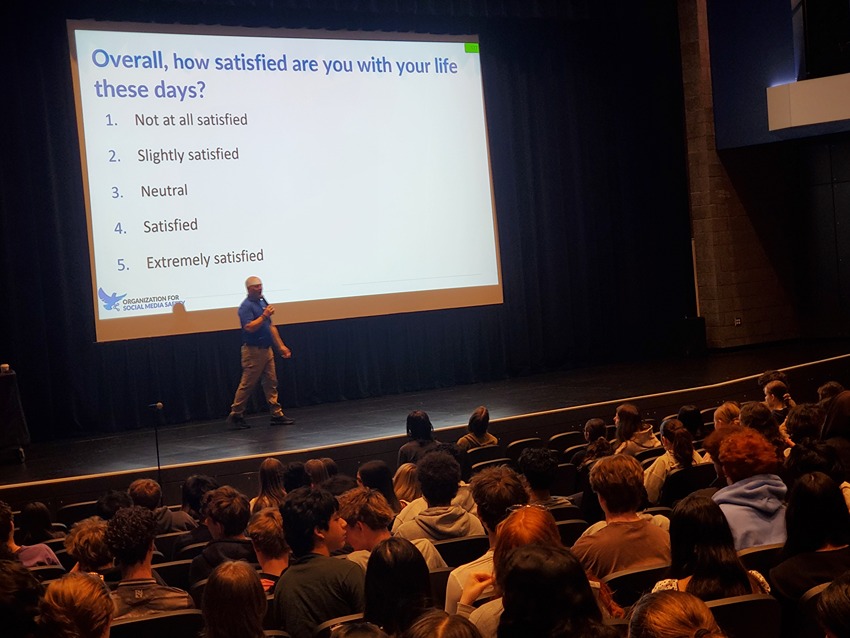
This April, with grant support from the Lake Washington Schools Foundation (LWSF), Juanita High School organized ‘Smart Scroll Day,’ a schoolwide event focused on raising social media awareness among students. Throughout the day, groups of approximately 200–300 students rotated through the high school theater for an interactive presentation led by the Organization for Social Media Safety. Students learned practical tools to navigate social media safely and thoughtfully while exploring topics such as digital wellness, online pressures, healthy screen habits, and safer online interactions.
A Growing Need for Digital Wellness Education
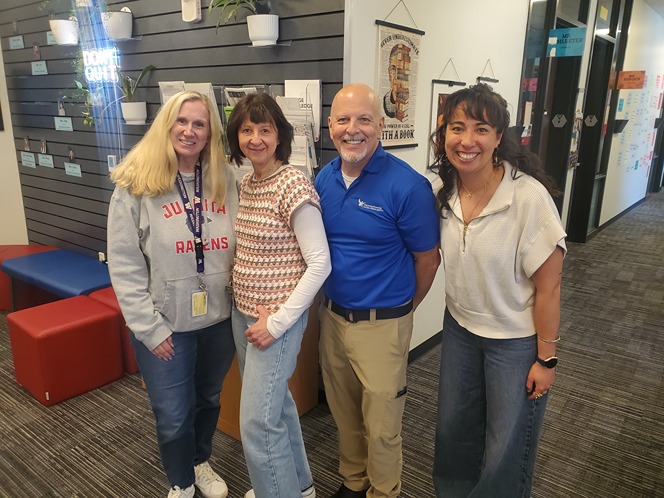
Juanita High School counselor Inés Bergman shared that the inspiration for the event came from seeing firsthand how deeply social media has become woven into students’ daily lives.
“Many of us as parents, educators, and counselors were caught off guard by how quickly things have changed,” Bergman explained. “As platforms like Snapchat, Instagram, TikTok, online gaming, and other digital spaces became part of growing up, students started coming to us with challenges connected to their online experiences.”
“Over time, we realized this wasn’t something happening outside of school; it was affecting students in our classrooms every day,” Bergman said.
Smart Scroll Day was designed to proactively address those challenges by helping students think more intentionally about how technology and social media impact their lives.
Students Engaged in Meaningful Conversations
One of the biggest takeaways from the day was just how engaged students were throughout the presentations.
“It was difficult to predict if this presentation would capture students’ attention,” Bergman shared. “Yet students were attentive, thoughtful, kind, and willing to reflect on their own habits and experiences.”
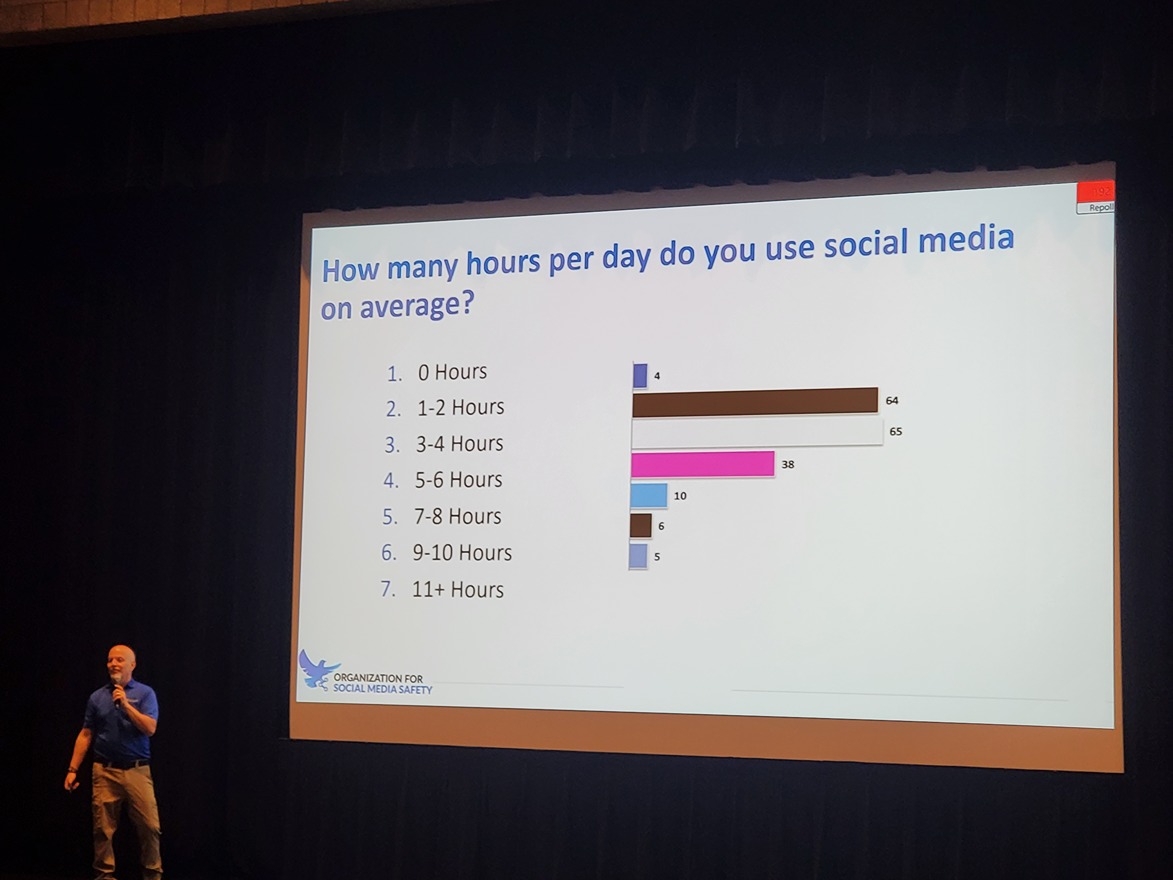
Students participated using clickers to answer questions throughout the presentation and watched the anonymous results appear instantly on screen. The interactive format helped students realize that many of their classmates were experiencing similar struggles online.
“It made the conversation feel much more relevant, interactive, and personal,” Bergman said.
Students were especially moved when presenter Ed Peisner, founder of the Organization for Social Media Safety, shared the story of his son being violently attacked after a dangerous social media challenge. Many students approached him afterward to ask questions and continue the conversation.
Another especially powerful moment came as students discussed how they would respond when encountering harmful content online and recognized that they have both the ability and responsibility to stop, report, and seek help.
Practical Tools Students Can Use Right Away
Rather than simply warning students about the dangers of social media, Smart Scroll Day focused on giving students concrete tools and strategies they could apply immediately.
Students learned how to:
- Recognize signs of unhealthy social media use
- Understand how algorithms influence what they see on social media
- Practice critical thinking before sharing content
- Set healthier boundaries around screen time
- Use “Stop and Report” strategies when encountering dangerous or harmful content online
Post-presentation survey results showed encouraging growth in students’ understanding of online safety, digital citizenship, and what to do when they encounter harmful content online.
“What was especially encouraging was seeing students describe specific strategies they planned to use moving forward,” Bergman said. “That suggests the learning felt relevant and practical.”
Many students also shared that prior to the presentation, they had never really stopped to think about how social media influences their emotions, attention, or behavior.
Supporting Student Mental Health
At Juanita High School, digital wellness is increasingly viewed as an important part of supporting the whole student.
“Students spend a significant portion of their lives online, so helping them navigate that space more safely and thoughtfully is absolutely connected to mental health,” Bergman said.
The work also aligns closely with Juanita’s efforts to continue building a comprehensive school counseling program that supports students academically, socially, emotionally, and as they prepare for life after high school.
“Helping students develop healthy habits, good judgment, and balance in their use of technology is just as important as helping them learn academic skills or plan for their future,” Bergman shared.
Creating Long-Term Change Through Ongoing Conversations
Bergman emphasized that meaningful behavior change does not happen overnight.
“We are not naive enough to think that one presentation is going to change behavior overnight,” she said. “Meaningful change takes time.”
Instead, Smart Scroll Day is part of a larger, ongoing effort to create conversations around digital wellness through school programming, counseling support, Mental Health Awareness Month activities, and parent education opportunities.
“Every time we bring these topics into the open, we add another drop to the bucket,” Bergman said. “Our hope is that over time those drops add up, helping students make more intentional choices about technology and better understand its impact on their lives.”
Juanita High School is already exploring future follow-up presentations by grade level, recognizing that students’ digital experiences and challenges evolve as they grow older. Conversations are also underway about additional evening events for families across the district.
“Technology is changing so quickly that many families are trying to figure this out alongside their children,” Bergman explained. “The more opportunities we can create for students, families, schools, and community partners to learn together, the greater the impact will be.”
Partnerships That Support Student Wellness
“We are incredibly grateful to the Lake Washington Schools Foundation for making this opportunity possible,” Bergman shared. “I truly think of them as partners in this work.”
LWSF is honored to support programs like Smart Scroll Day that help students build awareness, strengthen healthy habits, and develop tools to support their mental wellness both inside and outside the classroom. As technology continues to evolve, partnerships between schools, families, and community organizations will remain critical in helping students navigate the digital world in healthy, thoughtful, and informed ways.
Together, we can continue creating opportunities that help students thrive both inside and outside the classroom. To support programs like Smart Scroll Day and other student wellness initiatives across LWSD, please consider making a gift to the Lake Washington Schools Foundation.