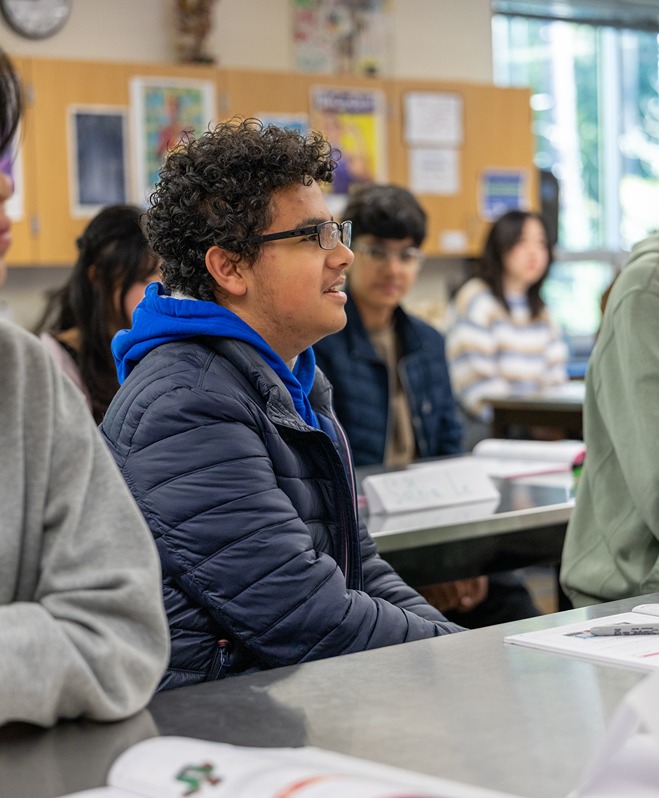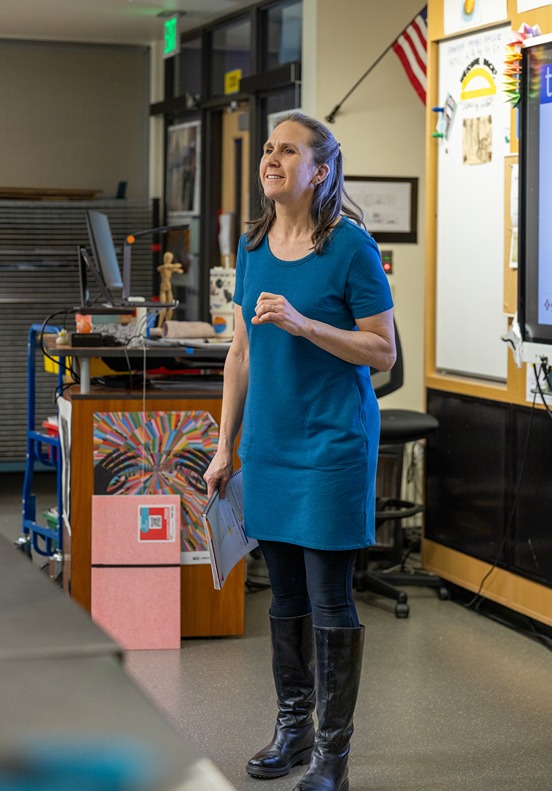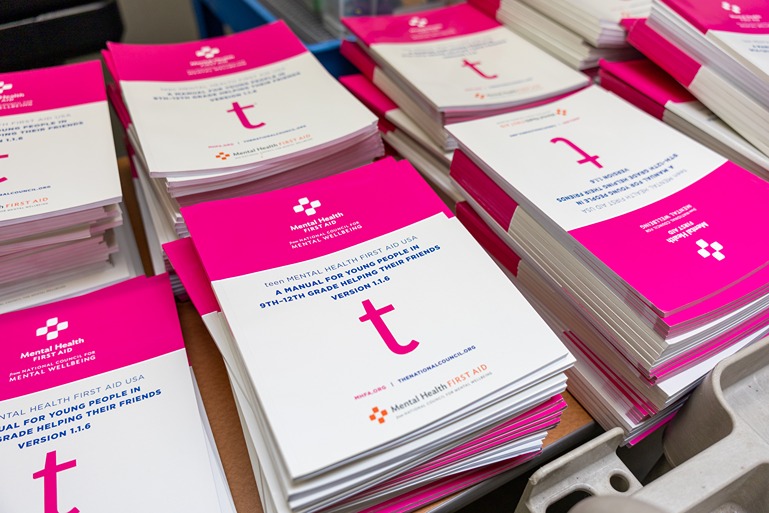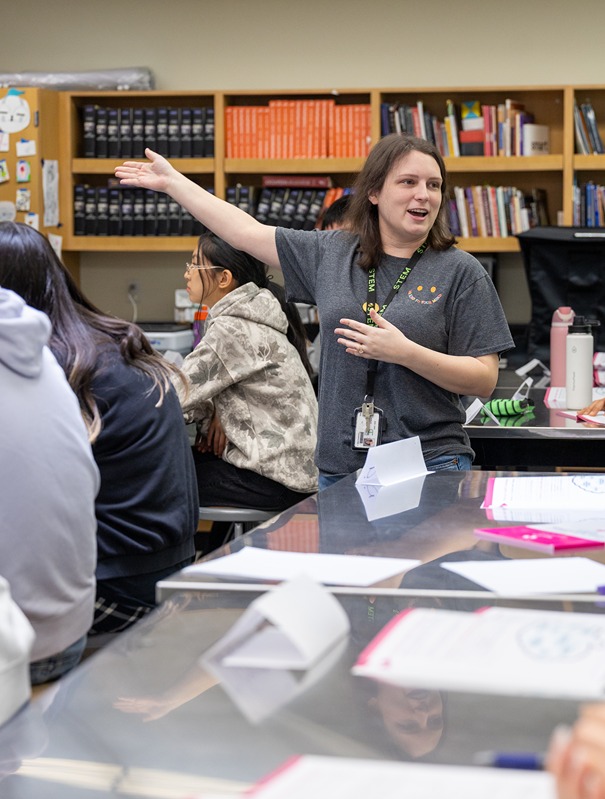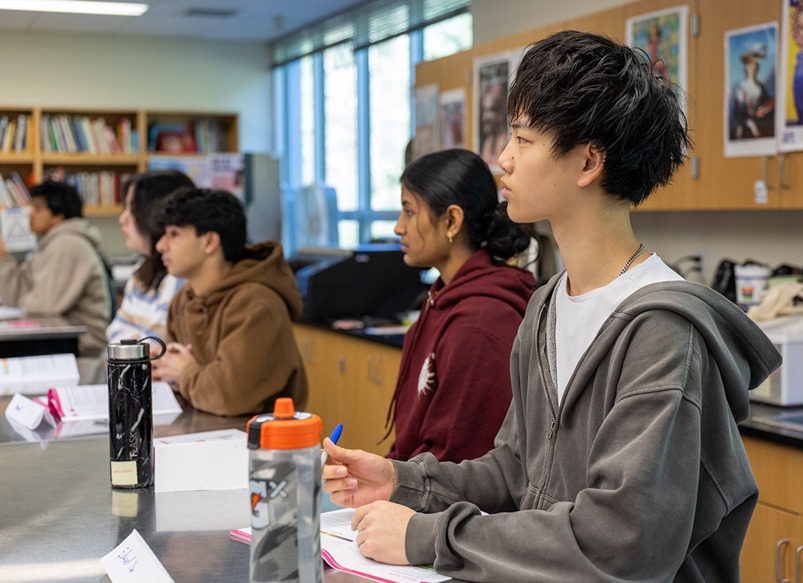


When a student is struggling with depression, anxiety, or thoughts of self-harm, their first cry for help often isn’t directed toward an adult—it’s toward a friend. That’s why Teen Mental Health First Aid (tMHFA) has been such a vital resource at Nikola Tesla STEM High School.
Funded by the Lake Washington Schools Foundation for the past three years, this nationally recognized program teaches students how to recognize signs of mental health and substance use challenges in their peers—and how to respond.
Teen Mental Health First Aid at Tesla STEM began as a district pilot made possible through Lake Washington Schools Foundation funding. Since the 2022–2023 school year, LWSF has covered instructor training and curriculum materials, committing more than $16,000 to sustain the program. This marks the fourth consecutive year of funding and the fifth class of Tesla students to receive the training. With this year’s cohort, every student at Tesla STEM will have experienced Teen Mental Health First Aid at some point during high school—either in 9th or 10th grade.
“This curriculum is designed around the understanding that adults are frequently not the first person teens turn to when they or a friend needs help,” explains Chase Covington, school counselor at Tesla STEM. “It equips students with the knowledge and skills to recognize a mental health challenge or crisis and respond appropriately.”
The 5-Action Plan
Developed by the National Council for Mental Wellbeing and the Born This Way Foundation, tMHFA centers around a 5-step action plan:
Look, Ask, Listen, Help, Your Friend.
Students learn to look for warning signs, ask how their friend is really doing, listen without judgment, help connect them with a trusted adult, and remember that their friendship matters deeply during times of distress.
Real Impact, Real Stories
At Tesla STEM High School, all students receive tMHFA training before the end of their freshman year. That’s nearly 300 students during the 2024-2025 year alone*—leading to 40 direct meeting requests with counselors and 81 additional students flagged for support based on their self-reported moods.
The program’s impact is powerful and personal. Chase shared one recent example:
“After learning the ‘Look’ step, a student came to our behavioral health support specialist, Cora, concerned about a friend’s safety. He had noticed multiple warning signs. Because of that brave step, Cora was able to intervene that same day with a suicide risk assessment. Since then, that student has received ongoing support and made significant academic and personal progress.”
This story isn’t an outlier. Each year, tMHFA has led to interventions that have quite literally saved lives.
Culture Shift and Connection
Teen Mental Health First Aid is creating more than one-on-one impact—it’s driving a culture change. Because every student is trained, there’s now a shared language around mental health. Counselors and students can refer to specific action steps in conversations, deepening trust and communication.
It’s also breaking down stigma. “The program helps teens realize there is mental health support at school,” says Chase, “and that their role as a friend is important—but they don’t have to carry it alone.”
Student Voices
Anish Vaish, a student speaker at LWSF’s 2024 Spring Benefit, put it best:
“Teen Mental Health First Aid provides just the support that teens are looking for—right there in school and in person. I hope my peers will feel just as comfortable going to the school counselor for anxiety or depression as they would going to the nurse for a headache.”
Moving Forward
While the results have been inspiring, the need remains. Counselors hope to grow the program with more trained facilitators in the future to ensure sustainability and continuity.
As Morgan Lipe, LWSD’s Student Services Specialist, puts it: “Students are whole people. A huge part of their success isn’t just academics—it’s their mental wellbeing.”
Thanks to the support of its donors, LWSF continues to fund this and other similar programs at high schools across the district.
If you’d like to help continue supporting this life-saving work, please consider making a contribution at www.lwsf.org/donate.
*Program note: To support earlier intervention, Teen Mental Health First Aid training shifted to 9th grade beginning in the 2024–2025 school year. That year, both 9th and 10th graders were trained as the program transitioned. In a typical year, approximately 150 students receive tMHFA training, with plans to introduce an 11th-grade refresher course in the future.